This article has been authored by Ayushi Verma*
वासांसिजीर्णानियथाविहाय
नवानि गृह्णाति नरोऽपराणि |
तथा शरीराणि विहाय जीर्णा
न्यन्यानि संयाति नवानि देही ||
(As a person sheds worn-out garments and wears new ones, likewise, at the time of death, the soul casts off its worn-out body and enters a new one.)
Bhagawat Geeta Chapter 2, Verse 20
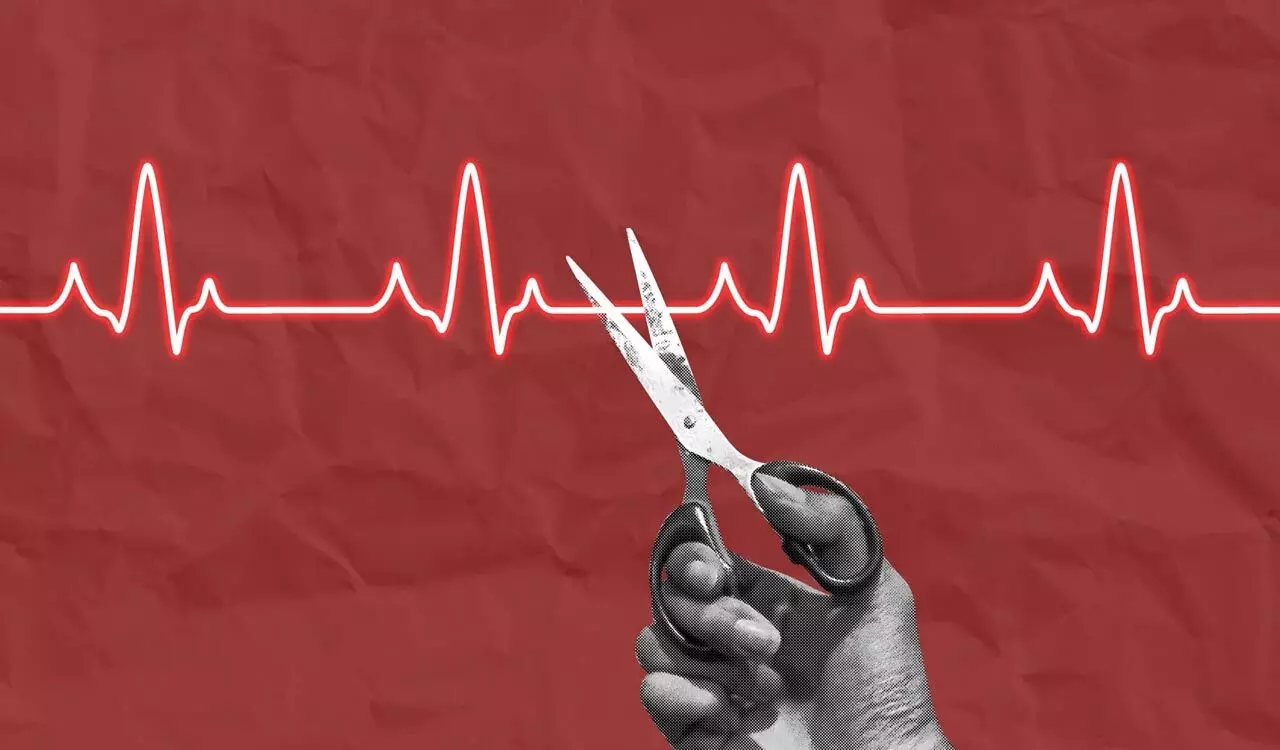
There was a time when medicine struggled to save lives. People died from diseases, accidents, and lack of care, and the goal of medical science was clear: to preserve life at all costs. Over time, with progress in technology and healthcare, we have learned not only to save lives but also to prolong them. But this progress raises an uncomfortable question: in trying to defeat death, have we also begun to interfere with the natural course of life? This creates a deep ethical tension; if it is acceptable to delay death, why is it so difficult to accept the choice to let life end with dignity? It is within this tension between preserving life and respecting its natural end that the debate on euthanasia and end-of-life choices continues to evolve. In the abovementioned verse, the Bhagavad Gita presents life and death not as opposites but as part of a continuous cycle, in which the body is seen as transient, while the soul (atma) is eternal, unchanging, and beyond destruction. In this understanding, death is not a rupture, but a transition; not a failure of life, but its natural culmination. Such a view challenges the modern tendency to equate life solely with biological survival, sustained at all costs through medical intervention, even when there is no hope.
Worldwide, the debate is generally explained in terms of four simple ideas. First, the religion argument says that many people oppose euthanasia because they believe life is sacred and should not be ended by humans.[1] Second, the slippery slope argument reflects a fear that if euthanasia is allowed, it might be misused or extended in harmful ways, especially affecting vulnerable people. Third, the autonomy argument supports euthanasia by saying individuals should have the freedom to decide what happens to their own bodies, including how and when they die. Lastly, the death with dignity argument focuses on compassion, suggesting that people who are suffering greatly with no hope of recovery should be allowed to die peacefully rather than continue in pain. Together, these ideas show that people’s views on euthanasia are shaped by a mix of beliefs, fears, and values about life, choice, and suffering.
In any of these ways, Active Euthanasia, which is an active act to end life, remains illegal in India. However, with Aruna Ramchandra Shanbaug v. Union of India[2] and Common Cause v. Union of India[3]; the Supreme Court recognised the “right to die with dignity” as part of the Right to Life under Article 21 and legalised passive euthanasia, allowing the withdrawal of life-sustaining treatment for patients in a permanent vegetative state (PVS). The Court balances abovesaid factors by addressing misuse through safeguards while strongly supporting patient autonomy and dignity under Article 21. Moving beyond moral or religious objections, the judgment aligns with the broader trend that societies valuing autonomy are more accepting of end-of-life choices. The Harish Rana v. Union of India[4] case marks a deeply meaningful milestone grounded in dignity and compassion in India’s end-of-life jurisprudence.
The Court made an important distinction between causing death and allowing death. It explained that stopping treatment does not mean killing someone. Instead, it means letting nature take its course. If a person is already dying because of a serious illness, withdrawing treatment only removes artificial support; it does not create death. This helps clear the confusion that passive euthanasia is the same as actively ending life. A person has the right to refuse treatment if it no longer helps them. Consent to treatment is not permanent; a person can change their mind when treatment becomes painful or useless.
Another important issue in the case was whether Clinically Assisted Nutrition and Hydration (CANH) is just basic care or medical treatment. The Court said it is medical treatment because it requires medical supervision and technology. The Court also explained the idea of “best interests of the patient.” When a patient cannot decide for themselves, others, such as doctors, family, or the courts, must decide. But they must not impose their own views. Instead, they must try to think from the patient’s perspective. They should ask: Is the treatment helping or just increasing suffering? Is there any real chance of recovery? What would the patient have wanted? This requires balancing the benefits and burdens of treatment, including pain, suffering, and loss of dignity. In this case, the medical boards (primary and secondary) agreed that continuing treatment would not help the patient and would only prolong suffering. The Court said that when such an expert agreement exists, going to court is not always necessary. However, since this was one of the first cases applying earlier guidelines, the Court clarified the law.
Ultimately, the case teaches us that life should not be measured only by its length, but by its dignity. Just as the Gita reminds us that the soul moves beyond the body, the Court recognises that holding on to the body at all costs is not always meaningful. Allowing a natural and dignified death is not against life; it is a way of ‘respecting’ it.
न जायते म्रियते वा कदाचि
नायं भूत्वा भविता वा न भूय: |
अजो नित्य: शाश्वतोऽयं पुराणो
न हन्यते हन्यमाने शरीरे ||
(Atma is not born, nor does it ever die; after having been it does not cease to be, unborn, eternal, changeless and ancient, it is not killed when the body is destroyed)
Bhagawat Geeta Chapter 2, Verse 20
* Research Scholar, Indian Law Institute, New Delhi – 110001.
[1] Ellen Verbakel and Eva Jaspers, “A comparative study on permissiveness towards Euthanasia: Religiosity, slippery slope, autonomy and Death with Dignity” 74(1) Public Opinion Quarterly 109-139 (2010).
[2] AIR 2011 SUPREME COURT 1290.
[3] Common Cause v. Union if India (2018) 5 SCC 1;Common Cause v. Union if India (2023) 14 SCC 131.
[4] (2026) INSC 222.